Food
Chinese food differs sharply by region. This guide covers the heat of Sichuan and Hunan, the lighter Cantonese and Shanghai styles, northwestern noodles, Xinjiang halal food, and ordering tips.
The first step in any China food guide is to split it by region. Even within Chinese cuisine, the flavors, ingredients, and cooking methods differ sharply from place to place.
Below is a rundown of signature dishes, flavor profiles, ordering tips, ways to adjust the heat, and how to handle dietary needs like vegetarian and halal.
It is most accurate to approach Chinese food region by region. Even a dish with the same name tastes different depending on where you are.
Deciding on regional dishes as you plan your route turns meals into part of the journey.
The table gives typical examples, and the same dish can differ from one restaurant to the next.
| Region | Signature dishes | Flavor |
|---|---|---|
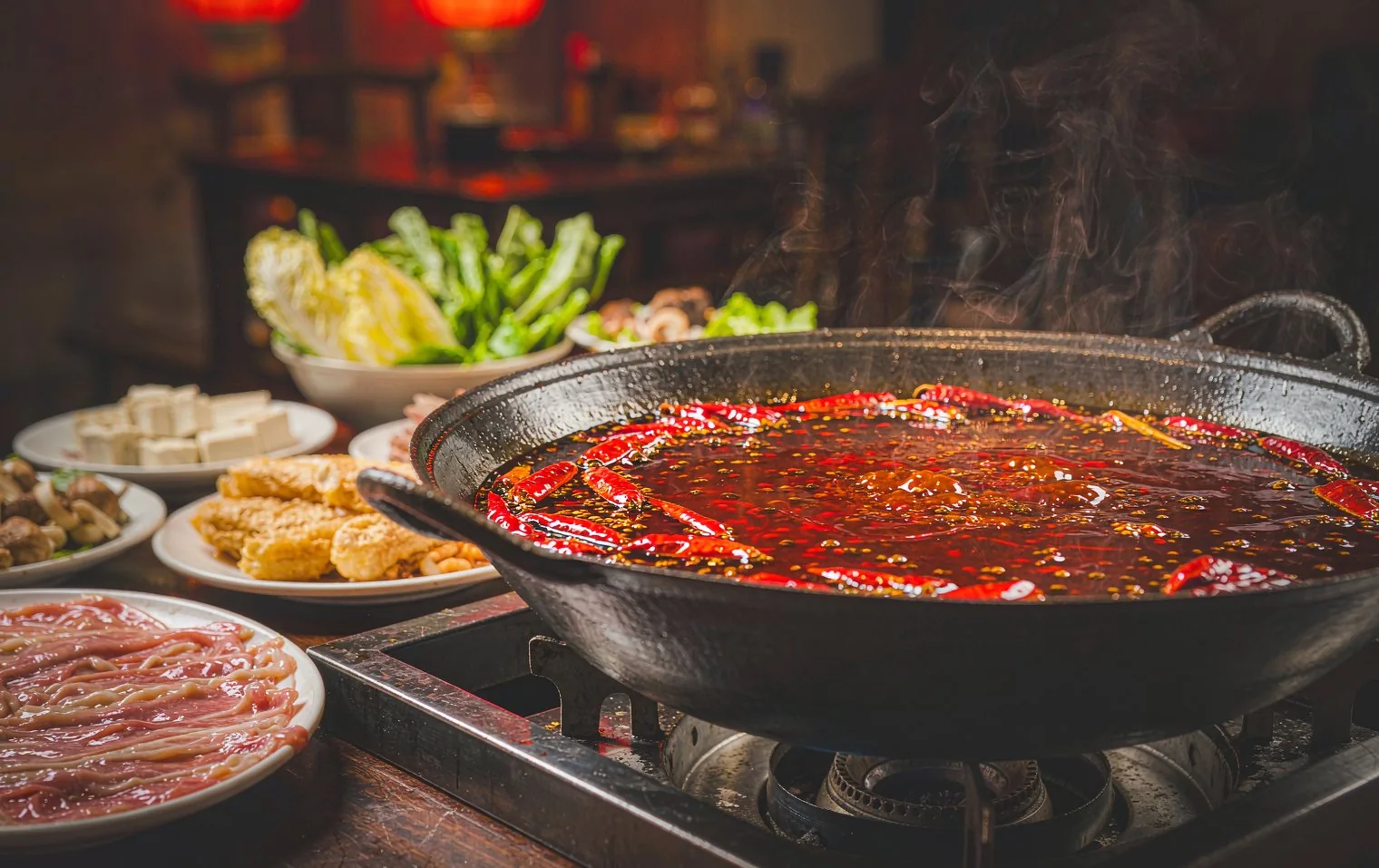
| Sichuan | Mapo tofu, hotpot, dan dan noodles | Bold numbing-spicy aroma, quite oily. |
| Hunan | Stir-fries, smoked dishes | Direct, sharp heat with a salty edge. |
| Guangdong | Dim sum, roast dishes, soups | Lets ingredients shine, on the lighter side. |
| Shanghai | Soup dumplings, pan-fried buns | Sweet and tender. |
| Xi'an and the northwest | Lamb dishes, noodles | Hearty, built on noodles and lamb. |
| Xinjiang | Lamb skewers, spiced rice, flatbread | Richly spiced, lots of halal restaurants. |
| Inner Mongolia | Lamb, dairy dishes | Simple ingredients, clean flavors. |
| Yunnan | Rice noodle dishes | Clear broth, varied aromatics. |
The same dish differs in heat and oil by region, so on a first visit ask locals for a recommendation.
Sichuan heat arrives with the numbing aroma known as mala, while Hunan heat is more direct. If spicy food is a lot for you, ask for adjustments from the start.
If the phrases are hard to say, save them in a translation app and show your screen.
Guangdong and Shanghai emphasize ingredients over heat. Enjoy dim sum at breakfast and lighter soups and braises.
If spicy food is difficult, or you travel with kids, these regions are especially comfortable.
The northwest centers on wheat dishes and lamb. Noodles and soups make a hearty meal on the move.
Spicing is moderate, so it suits travelers who avoid heat.
Xinjiang has many halal restaurants, which makes it easy for Muslim travelers. Inner Mongolia centers on lamb and dairy.
Both regions keep ingredients simple, so you taste the food itself.
With a group, ordering one dish each to share lets you try more flavors.
Last updated: 2026-10-13 · 미식
No. Sichuan and Hunan are spicy, while Guangdong and Shanghai are lighter. Flavors differ sharply by region.
Save phrases like not spicy or mild in a translation app and show your screen. That gets the point across accurately.
There are many vegetable dishes, and you can ask to skip meat and stock. Since stock is sometimes the base, check in advance.
Xinjiang has many halal restaurants. Elsewhere you can look for restaurants with a halal sign.
Stalls with fast turnover and plenty of customers are generally fine. Check the water and hygiene as well.
Always re-check the latest conditions on the official sites before you travel.
Message us on WhatsApp or email with the basics and your dedicated planner will send a draft itinerary and estimate within 24 hours.
There is no form here. Use the channels below and your dedicated planner will reply personally.