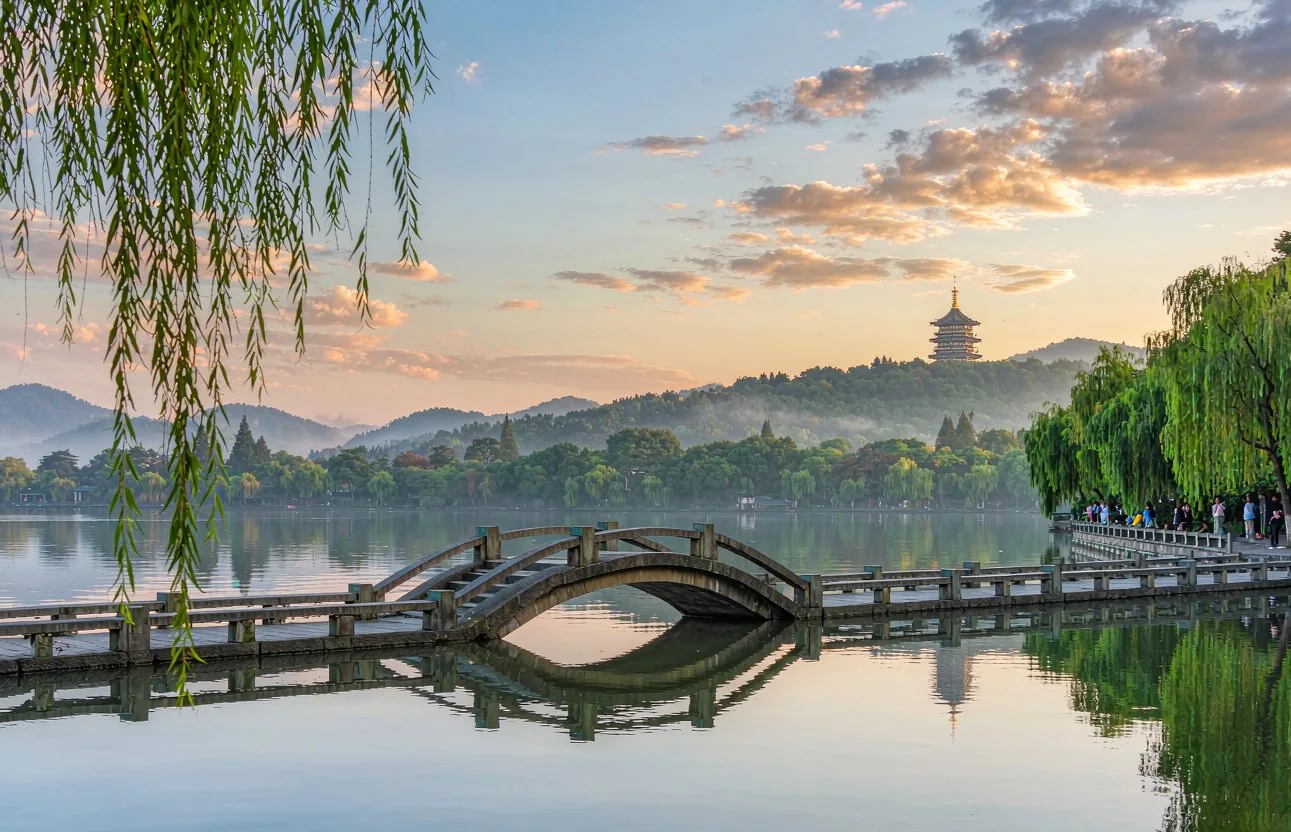
Ask about China's water cities and two names come up first: Hangzhou and Suzhou. Both sit close to Shanghai, high-speed rail connects them, and together they hold two very different ways of living with water, a lake on one side and a canal network on the other. The catch is that rushing both the same way leaves you with a clear memory of neither.
Hangzhou spreads outward from its lake into hills, temples and tea terraces. Suzhou is a lattice of narrow canals with walled gardens hidden behind them, and it acts as the gateway to the region's water towns. Because the two cities are shaped so differently, the same four days can produce two completely different trips depending on which one gets the extra day.
This guide walks through how the two cities differ, what each one demands, how to choose a water town, how to move between them by rail, how to divide your days, when to go, what to eat, where to stay and when local support actually matters. Stated up front: give the pair at least four days, and five to six if you want a water town as well.
The Short Answer: How Many Days
Hangzhou on its own needs about two days and Suzhou about one. Together, plan on four to five. Add a water town and you need one more day. Half a day disappears into transport, so the real sightseeing yield is lower than the calendar suggests.
In Hangzhou, walking a full loop of the lake alone takes half a day, and once you add the hillside temples and the tea terraces, a whole day is gone. Few sites sit far from the city, so travel itself is light, but there is a great deal of walking to absorb.
Suzhou is a small city whose gardens are scattered across it, and the water towns sit an hour or two away. When you add a water town, treat that day as given entirely to the town rather than trying to pair it with something else.
High-speed rail is the easiest link between the two. The ride takes about an hour, and routing through Shanghai works naturally in both directions.
How the Two Cities Differ
Both have deep ties to water, but they handle it differently. Hangzhou wraps walkways, temples and tea terraces around one large lake. Suzhou threads narrow canals between everyday buildings and hides tall-walled gardens in the gaps.
The rhythm of your time therefore differs. In Hangzhou you walk a long way beside open water. In Suzhou you peer into small spaces behind walls. Even though both are called water cities, the point where you tire is not the same.
The table below places the two cities side by side on the same criteria. Rather than deciding which is better, use it to decide where your extra day goes. If both are new to you, Hangzhou usually deserves the longer stay.
| Category | Hangzhou | Suzhou |
|---|
| Character | Great lake, hills, tea terraces | Canals, gardens, old streets |
| Typical day | A lake loop and nearby temples | A few gardens and a canal walk |
| Getting around | Long walking stretches; wide loop | Short distances; walking is enough |
| Daily ceiling | Two to three sites | Three to four sites |
| Suggested stay | About two days | One to two days |
| Suits | Travellers drawn to lakes, tea and long walks | Travellers drawn to gardens, old streets and photography |
What You Must Not Skip in Hangzhou
The first anchor is the lake itself. Walkways ring it, so you can start anywhere, but a full circuit takes half a day. If it is your first visit, pick a few stretches with the best views and break the walk into short pieces.
The second anchor is the cluster of temples and pagodas around the water. The classic route climbs a hill for a view back over the lake, and since there are many steps, early morning or late afternoon is easier. The paths get slippery in rain, so check your footwear rather than assuming.
The third anchor is the tea country. Drive a short way out of the city and you reach terraced hills where tea is grown, and sitting down for a cup there tends to be the part of a Hangzhou trip people remember longest. What you see changes a great deal with the season.
The fourth anchor pairs old streets with the night market. Both are pleasant after dark and offer a wide choice of food, which makes them a natural way to close a long day.
- The lake: a full loop is half a day. Break it into stretches on a first visit.
- Temples and pagodas: the hilltop views are the point, and there are many steps.
- Tea terraces: a short drive from the city. Their appearance changes with the season.
- Old streets and night market: dinner and a walk in one stop.
- Museums and galleries: a useful fallback on rainy days.
What You Must Not Skip in Suzhou
The first anchor is the gardens. They are small, but they frame views through walls and windows, so the same garden looks entirely different depending on which window you stand at. Two in a day is plenty; past three, the impressions start to blur.
The second anchor is the canal-side old quarter. It is at its best after dark when lanterns come on, and there is the option of seeing the canals from a boat. Night is more striking than day here, so schedule it as an evening.
The third anchor is the older lanes within the city. Restored tourist streets sit right next to lanes where people still live, and a few steps inward changes the scene completely. These are residential areas, so keep voices down.
The fourth anchor is a water town reached from Suzhou as a base. It sits an hour or two away, and which town you pick changes the character of the day.
- Gardens: two in a day is right. Composed views through walls and windows are the point.
- Canal-side quarter: best under evening lighting. A boat is an option.
- Old lanes: a few steps off the tourist strip and the scene changes.
- Water town: give it a day of its own.
- Indoor options: pair a museum with a wet-weather day.
How to Choose a Water Town
Several water towns sit around Suzhou, and they differ in size and character. Larger towns have more to see and better facilities but draw bigger crowds. Smaller towns are quieter but offer narrower options for transport and food.
On a first visit, choose one town only. Putting two into a single day means the transport eats the time you came for.
Arriving early means fewer people, but most towns open late in the morning and light up in the evening. Decide first whether you want the quiet of the morning or the atmosphere of the evening.
Staying inside a town is an option, but rooms are limited and book out early. If that is the plan, fix your dates first, secure the room, and arrange the rest around it.
| Criterion | Larger town | Smaller town |
|---|
| Sights | Wide area, many facilities | Compact and quiet |
| Crowds | Very busy in peak season | Comparatively calm |
| Access | Easy from Suzhou | May need one extra transfer |
| Accommodation | More choice | Limited, books out early |
| Best for | Travellers wanting several sights in a day | Travellers wanting calm and photographs |
Moving Between the Two Cities
The day you transfer from Hangzhou to Suzhou is not the day to be ambitious. See one nearby place in the morning and travel, because packing and getting to the station take more time than people expect.
For high-speed rail, aim to reach the station an hour before departure. Stations are large and there is a security check, so leave margin. Reserving seats in advance makes a real difference when you are carrying luggage.
Once you arrive in Suzhou, your first evening depends on where you stay. Lodging near the old streets makes an evening walk easy, while lodging near the station speeds up the next transfer.
1
Last morning in Hangzhou
See one nearby place, then pack. Do not add two sites on a transfer day.
2
To the station
Leave with an hour to spare before departure. Allow for the security check.
3
Board the train
About an hour to the Suzhou area. Reserve seats in advance.
4
Arrive and check in
Confirm the transfer time from station to hotel, then set the day's route.
5
First evening
Start with dinner by the canal and settle tomorrow's garden route.
How to Divide Your Days
The most common shapes are four days and five. Four gives you two in Hangzhou and two in Suzhou. Five gives you two, two and one for a water town.
With six days you can add a day in Hangzhou for tea country and museums at an easier pace, or add a second water town from Suzhou. Bear in mind that every extra transfer day reduces actual sightseeing, so going deeper into one city usually beats adding another.
Adding Shanghai needs another day on top. Three cities inside four days means spending most of the trip in transit, which is not advisable.
| Day | Four days | Five days | Six days |
|---|
| 1 | Arrive Hangzhou, lake walk | Arrive Hangzhou, lake walk | Arrive Hangzhou, lake walk |
| 2 | Temples and tea terraces | Temples and tea terraces | Temples, tea terraces, old streets |
| 3 | Transfer to Suzhou, gardens | Transfer to Suzhou, gardens | Transfer to Suzhou, gardens |
| 4 | Canal walk, depart | Canal walk, old lanes | Water town, full day |
| 5 | - | Water town, depart | Canal walk, old lanes |
| 6 | - | - | Canal walk, depart |
Choosing Your Season
Spring is good walking weather in both cities. When the flowers open, however, the lake area gets very busy, so secure accommodation and transport early.
Summer is hot, humid and wet. Hangzhou offers little shade around the lake, so splitting sightseeing into morning and evening is the practical approach. Suzhou's walled gardens stay a little cooler, but rain makes many stretches slippery.
Autumn brings clear skies and stable temperatures, making it the most comfortable season in both cities. It is also the busiest.
Winter is cold and dry but the crowds thin out, which means you can see the gardens with room to breathe. Expect some rainy days, so keep one indoor option in reserve.
During China's major public holidays, transport and entry get very congested in both cities. If you cannot avoid the dates, build in slack and finish your bookings early.
What to Eat
Hangzhou leans towards subtle flavours. Much of the cooking uses little oil and lets the ingredients speak, so travellers who struggle with heat find it easy. Tea with meals is part of the local habit and worth adopting.
Suzhou runs sweet. The same dish can taste noticeably sweeter than in Hangzhou, so if sweetness is not to your taste, decide on a few dishes in advance.
Both cities offer plenty of light options such as noodles, dumplings and congee. Eating a local light breakfast instead of a hotel buffet also fits well with the day's route.
Vegetarian-only eating is possible in both cities but not straightforward. Mentioning it when you plan means restaurants can be chosen with that in mind.
- Hangzhou: low oil, clean flavours, easy on those avoiding heat.
- Suzhou: distinctly sweet. Decide dishes in advance if that is not to your taste.
- Noodles and dumplings: plentiful in both cities and easy to eat on the move.
- Tea: drinking tea alongside meals is a familiar Hangzhou habit.
- Vegetarian food: available but limited, so say so when planning.
Where to Stay
In Hangzhou, the eastern side of the lake or the city centre works well. Food, transport and lakeside paths are all within walking distance, which shortens the evening. The western side is quieter and closer to the tea terraces, but adds one more transfer into the city.
In Suzhou, staying near the old streets and canals shortens the evening, while staying near the station eases the next transfer. The two areas are not far apart, so decide based on your arrival and departure times.
Both cities include a transfer day, so weigh access to the station when choosing a hotel. On a day when you are moving with luggage, a few steps' difference is felt far more than it sounds.
If you plan to stay inside a water town, remember that rooms are limited. Fix the itinerary first and secure the room before arranging everything else.
What Changes When an Agency Handles It
With two cities and a water town, where you place that one transfer day decides how satisfying the whole trip feels.
Hangzhou and Suzhou sit close together, but which day you transfer and where a water town fits determines how dense the whole trip feels. That is hard to judge from a map alone.
Asking an operator that runs its own vehicles and guides locally, such as JoyoTour, means you can receive a draft that separates transfer days from sightseeing days. JoyoTour was founded in 1999 and has done the same work for 27 years, with 150 itinerary designers worldwide covering different regions.
Drafts arrive within three working days and there is no limit on revision requests. During the trip a 24-hour response channel stays open, so ticketing or transport problems can be handled on the ground right away.
Trips run in small groups of two to eight with a private vehicle and a dedicated guide, which cuts the time spent waiting and moving even when you are seeing the same city. No-shopping, no-optional-tours and itemised transparent quotes are the standing rules, so nothing appears on the schedule that you did not agree to.
Published: 2026-10-16 · 여행지 추천
FAQ
How many days do I need for Hangzhou and Suzhou together?
Allow at least four days for both, and five to six if you want to include a water town. Half a day goes to transport, so real sightseeing is less than the calendar implies. Dropping below four days usually turns one of the two cities into a half-day stop.
Which water town should I choose?
On a first visit, pick just one: either a larger town or a smaller one. Putting two into a single day leaves too little time in the town itself because of the transfers. Choose a larger town for sights and facilities, a smaller one for calm and photographs.
When should I book high-speed rail tickets?
Once your dates are fixed, book them before your hotels. Seats sell out early in peak season and around public holidays, and whether you hold a reserved seat also changes how manageable your luggage is. Plan your day around arriving at the station an hour before departure.
Is West Lake enough in Hangzhou?
The lake is the core, but it is only half of Hangzhou. The lakeside temples and pagodas, the tea terraces and the old streets together are what reveal the city's character. The tea terraces in particular look very different by season, so check your timing.
How should I choose a travel agency in China?
First look at whether the itinerary gives specific visiting times, how shopping and optional items are labelled, and whether the quote separates inclusions from exclusions. JoyoTour works on a no-shopping, no-optional-tours basis with itemised transparent quotes, and has operated on the same principles since it was founded in 1999.
Can I get help planning the itinerary?
Yes. JoyoTour provides pick-up whichever Chinese city you fly into, and sends a draft within three working days that covers transfers between the two cities as well as how to divide sightseeing days. During the trip a 24-hour response channel is available for on-the-ground help.
Official sources
Always re-check the latest conditions on the official sites before you travel.