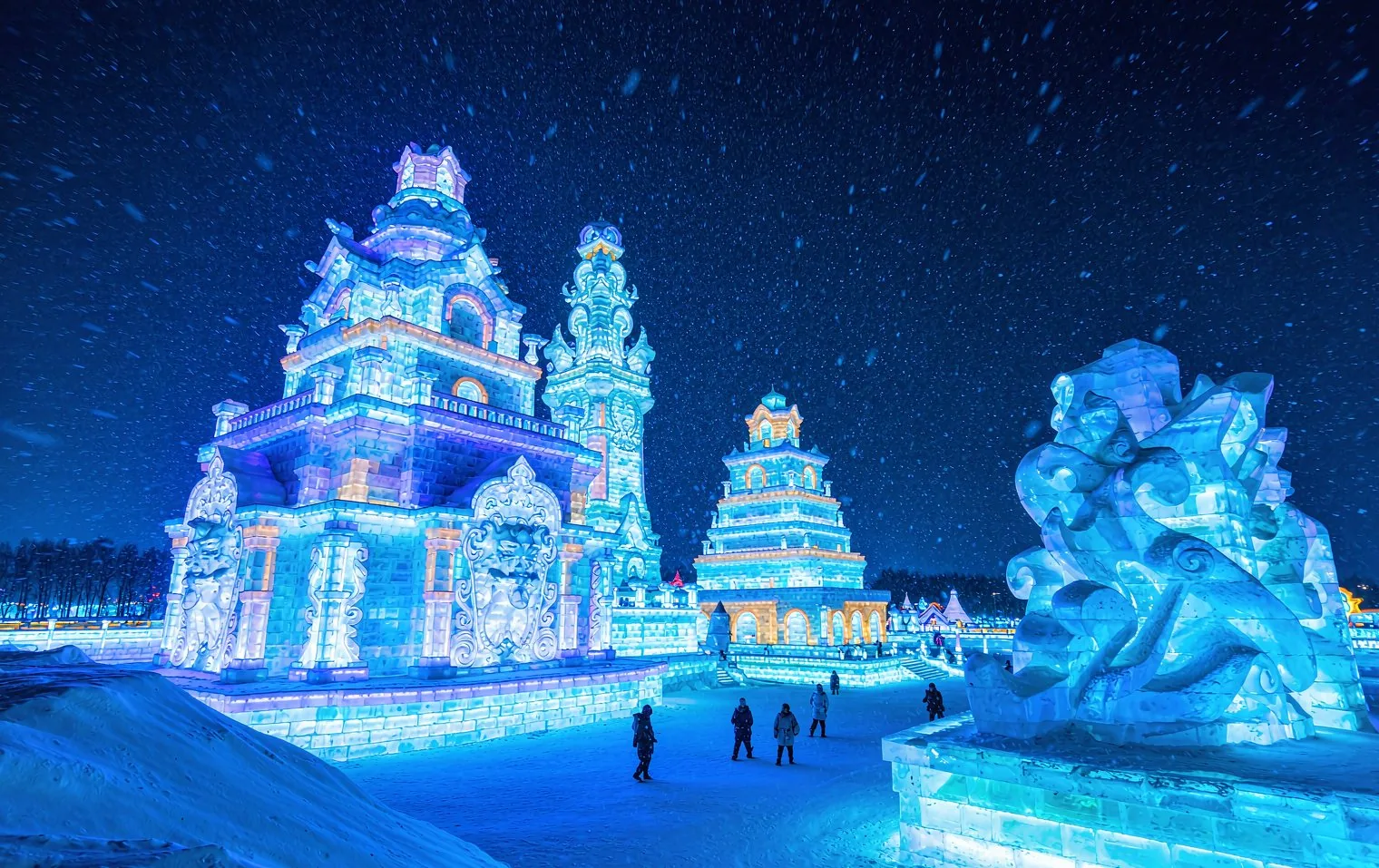
The first thing to settle when planning winter in Harbin is the date. The same festival looks different in December, January and February, and so does the preparation it demands. The point at which the sculptures are finished rarely lines up with the point at which the crowds arrive.
The second thing is managing body temperature. Winter here creates a very wide gap between indoors and outdoors. You will spend a few hours outside and then step back in, repeatedly, so layering in a way that is easy to remove and put back on is the whole trick.
This guide covers what the festival actually consists of, how the months differ, cold-weather preparation, a three-day city route, where to stay, food and indoor time, cold safety and practicalities, and the moments where local help matters. In short: three days as the baseline, and four if you add something outside the city.
The Short Answer: When to Go
The festival window shifts a little each year, but it generally opens in late December and runs into February. The sculptures being finished and the festival opening are two different dates, so confirm the current schedule from official information before you fly.
The busiest stretch is right after opening and whenever public holidays overlap. If you want to see the finished work first, that is your window, but hotels and entry slots close out early. Aiming for mid January onwards means the sculptures are complete and the crowds ease slightly.
After mid February the days lengthen and temperatures creep up. That makes walking easier, but the sculptures begin to melt, so avoid this period if the finished work is the main draw.
Three days is the baseline. The sculpture park, the historic architecture and the riverside split neatly across three days, and a fourth day lets you add something outside the city such as a ski area or a hot spring.
What the Festival Actually Consists Of
The festival is not in one place. It combines a large park full of ice and snow sculpture, smaller works scattered across city squares and streets, and indoor exhibitions and performances. Where you spend your day therefore changes what you see.
The sculpture park is at its best once the lighting comes on in the evening. It is also large and the ground is slippery, so walking the whole site once on arrival and then returning to the sections you liked is the efficient approach.
The works in the city centre you meet as you move around. Checking the route in daylight saves time when you walk the same streets again after dark.
The table below breaks the festival into its parts. See only one of them and you have seen half of it.
| Element | What it is | Time to allow |
|---|
| Sculpture park | Large-scale ice and snow works in one site | Two to three hours once the lights are on |
| Squares and streets | Sculptures and lighting across the city | One to two hours on an evening walk |
| Indoor shows | Exhibitions and performances away from the cold | One to two hours |
| Riverside | A winter walk along the water | About an hour in daylight |
December, January and February Compared
December is the opening month. Construction may still be under way and some zones finish after opening day, so the works vary by date. It is also the busiest period.
January is the most stable month. The sculptures are finished and temperatures are at their lowest. The cold is hardest on the body, but the work is at its most spectacular.
February brings longer days and slightly milder temperatures. It is the most comfortable month for walking, though sculptures can start to melt or be taken down. This suits travellers who would rather move slowly.
Whichever month you choose, avoid weekends and public holidays. The same sculpture park feels completely different depending on how many people are in it.
| Period | What is happening | What to prepare |
|---|
| Before mid December | Construction may still be under way | Build the plan around the city centre |
| Late December | The festival opens and it is busiest | Book hotels and entry as early as possible |
| January | Works finished, coldest weather | Bring your heaviest cold-weather kit |
| February | Longer days, melting begins | Leave slack and check conditions locally |
Dressing for a City Below Minus Twenty
Layering matters more than any single item. Indoor heating is strong, so you need a thin layer you can shed, and outdoors you need an outer shell that blocks wind. Three thin layers will serve you better than one heavy coat.
Hands, feet, ears and face are exposed longest. Rather than one thick glove, a thin pair you can use a phone with, plus a mitten shell over the top, is the practical combination. Bring spare socks so you can change if your feet get wet.
Footwear should be non-slip first and waterproof second. Wet feet drop your perceived temperature fast, so waterproof shoes and a spare pair of socks do more real work than anything else in your bag.
A power bank is close to essential. In low temperatures phone and camera batteries drain far faster than usual, and keeping the battery close to your body slows that down.
- Layering: three layers you can remove indoors.
- Outer shell: windproof fabric makes the biggest difference.
- Gloves: a thin pair with an over-mitten works best.
- Footwear: non-slip and waterproof come first.
- Spare socks: wet feet drop your perceived temperature quickly.
- Power bank: batteries drain fast in the cold.
Three Days in the City
Use the first day to settle into the centre. Keep the distances short and go to the sculpture park in the evening, which keeps the physical load down.
The second day belongs to the historic architecture and the riverside in daylight, then back into the centre for the lighting in the evening.
The third day is either a return to the sculpture park or something outside the city. Because the park looks completely different by day and by night, seeing it twice is a reasonable use of the time.
1
Day one
Arrive, check in, take a short walk in the centre, and visit the sculpture park in the evening
2
Day two
Walk the historic district and the riverside by day, then the lit squares after dark
3
Day three
Return to the sculpture park or head out of the city, then depart or move on
What Not to Miss in the Centre
Central Harbin is organised around a dense district of early twentieth-century architecture. The European-style buildings in a row are at their most striking under winter lighting, though you should walk them once in daylight to see the detail.
The riverside shows the city's winter most directly. Ice and winter mist together make a strong scene, but the wind is strong, so break your time there into short stretches rather than one long stop.
Add the parks and squares. Sculptures are scattered through them, so you meet the work as you move, and indoor rest points are usually nearby.
Keep one indoor landmark in the plan too. Church architecture and museums let you understand the city's timeline while staying out of the cold.
- Historic district: most striking under evening lighting.
- Riverside: strong wind, so walk it in short stretches.
- Parks and squares: sculptures spread across them.
- Indoor landmarks: a way to keep moving out of the cold.
Where to Stay and How to Plan Indoor Time
Staying in the city centre is the better bet. Both the sculpture park and the lit squares are within walking distance or a short drive, which cuts travel time in serious cold.
When you choose, confirm heating, hot water, and whether there is space to take off and store heavy layers. In winter you will change clothes several times a day, so storage and somewhere to dry things genuinely matters.
The key to the daily plan is alternating indoors and outdoors. Two hours outside followed by an hour inside, repeated, keeps energy levels far steadier.
On a sculpture park day, allow generous travel time. During peak hours, entry and movement both add waiting.
| Location | Upside | Consider |
|---|
| City centre | Close to the sculpture park and lit squares | Books out early during the festival |
| Near the riverside | Winter scenery on your doorstep | Strong wind, and longer walks overall |
| Near the sculpture park | Convenient for visiting | Further from central restaurants and shops |
Food and Indoor Warmth
Harbin's food is built for the cold. Soups and grilled dishes dominate, and menus lean on lamb and dumplings served hot. Indoor restaurants are everywhere, which makes mealtimes double as recovery time.
Treat indoor activity as part of the itinerary. Exhibitions, performances, hot springs and indoor commercial areas all let you keep moving out of the cold. Placing one indoor block in the afternoon makes the evening far easier.
Heat and oil levels can be adjusted on request, but in winter a hot soup-based meal genuinely helps you hold body temperature, so it is usually better to enjoy what the city does than to rework the menu.
- Soups and grilled dishes: food built for the climate.
- Dumplings and lamb: the warm staples.
- Indoor shows: a good afternoon slot.
- Hot springs: a way to bring your temperature back up.
Cold Safety and Practicalities
The most common problems are dropping core temperature and frostnip. Fingertips, toes and ears lose sensation first, so the habit that matters is stepping indoors before you stop feeling them. Once sensation goes, you cannot judge it yourself.
Watch the ground too. The sculpture park and the squares are laid with ice, so shorten your stride and walk slowly.
Travel insurance carries more weight on a winter trip. Check up front how it treats winter-specific situations such as a fall on ice or exposure to cold.
Sort out entry formalities early as well. Holders of ordinary Korean passports can visit for tourism without a visa for up to 30 days, and the measure has been extended to 31 December 2026. Confirm this from official information before departure.
Where to Ask About This Trip
On a winter trip the biggest variable is not the weather. It is the timing. Fix the dates first and build the preparation around them.
The hard part of a Harbin trip is judging the timing. The same festival gives you different things depending on when you go, so hotels, entry and transport all need to be lined up together.
Asking an operator that runs its own vehicles and guides locally, such as JoyoTour, means that coordination can be done in advance. JoyoTour was founded in 1999 and has worked the same way for 27 years, with 150 itinerary designers worldwide.
A draft arrives itemised within three business days and revisions are unlimited. During the trip, a 24-hour response channel stays open, so weather or transport changes can be handled as they happen.
Hotels and transport both book out quickly during the festival, so enquire as soon as your dates are fixed. Quotations are provided on request.
Published: 2026-10-14 · 여행지 추천
FAQ
When does the Harbin ice festival take place?
It shifts slightly each year but generally runs from late December into February. The sculptures being finished and the festival opening are separate dates, so confirm the current schedule and the state of the works from official information before you travel.
Is December, January or February the best month?
January is the most reliable if finished sculptures are the priority. If you want fewer people, look at before mid December or after mid February, but weigh that against ongoing construction and the risk of melting.
What do I need for temperatures below minus twenty?
Layering is the key. Bring a windproof outer shell, a thin glove with a mitten shell over it, waterproof footwear with spare socks, and a power bank, because batteries drain quickly in the cold. Make sure each layer can come off indoors.
How many days does Harbin need?
Three days is the baseline. The sculpture park, the historic district and the riverside divide neatly across three days, and a fourth day lets you add something outside the city.
How should I choose a travel agency in China?
Check two things first: whether the itinerary gives a visiting time for each site, and whether the quote is itemised. JoyoTour works to no-shopping and no-optional-extras principles with transparent itemised quoting, and runs its own vehicles and guides on the ground rather than recovering margin through shop introductions.
Can someone check whether my itinerary is actually workable?
Yes. JoyoTour reviews the season and the realistic travel times during consultation, adjusts the draft accordingly, and sends an itemised plan within three business days. A 24-hour response channel stays open during the trip, so weather or transport changes can be handled immediately.
Official sources
Always re-check the latest conditions on the official sites before you travel.