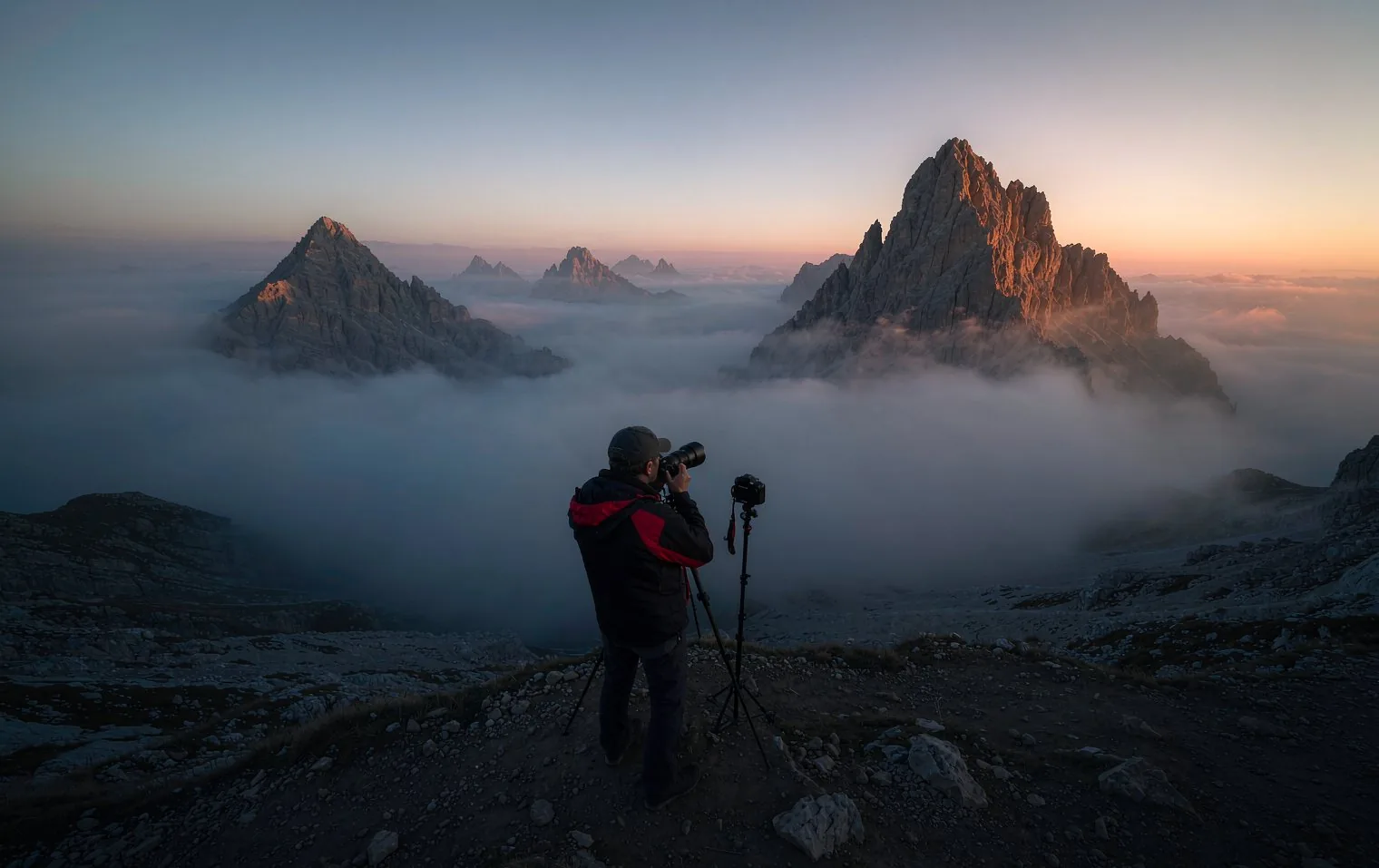
What decides a photography trip is not how many landmarks you visited but when you stood there. The same peak is a completely different photograph at noon and at sunrise. So a photo trip must be built around a timetable of light, not a list of sights.
Planning around light changes the shape of a day. You move before sunrise, leave the harsh midday hours for travel and rest, and return to a shooting point as the sun goes down. Hotel location and vehicle routing all follow from that rhythm.
This article covers the best shooting hours by region, how to split sunrise and sunset routes, tripod and drone rules, protecting gear from sand, dust and cold, and buffer days for weather.
Build Around Light, Not Landmarks
A good photograph comes from a good hour, not a good landmark.
The starting point of a photo trip is not a list of sights but the times the sun rises and sets. Calculate the travel time between a shooting point and the hotel first, then build the day around it. That way you stand in the same place at the same time and catch far better light.
Harsh midday light works against most landscape photography. So use the middle of the day to move to the next location, rest, check gear, or shoot markets. Used well, the daylight hours let you catch two good windows of light in one day.
Success ultimately turns on being in position on time. Allow generous time for travel and waiting, and factor in the time to set up a tripod once you arrive.
Because the direction of light changes with season and hour, check the sunrise and sunset times for your dates first. Dividing the day by those times naturally settles when you must arrive at each shooting point.
Best Shooting Hours by Region
The hours below give a general direction and vary greatly with season and weather. Check the actual sunrise and sunset times for your dates, and we recommend arriving more than an hour ahead.
For sunrise shots, travel time matters most. You should be in position 30 minutes before the sun rises, so confirm the exact time from your hotel to the shooting point.
| Region | Around sunrise | Around sunset | Note |
|---|
| Zhangjiajie | Cloud seas over the peaks | Peak silhouettes | Check the first cable car time. |
| Guilin and Yangshuo | River mist and boats | Riverside glow | Mist varies by season. |
| Dunhuang desert | Shadows on dune ridges | Shifting dune colour | Prepare for wind and sand. |
| Qinghai Lake | Dawn on the horizon | Reflections on the lake | A region with wide temperature swings. |
| Urban areas | Streets and architecture | Night lights and reflections | Check when the lights come on. |
Plan Sunrise and Sunset Routes Separately
Sunrise and sunset create light from different directions, so it is better to choose different shooting points. Set one east-facing point for sunrise and one west-facing point for sunset, and you can capture two complete windows of light in a day.
The most efficient approach is to base your hotel near the sunrise point. A short pre-dawn drive is safer and saves energy. For sunset, travel separately, shoot, and return to the hotel in the evening.
Putting both shoots in one day leaves a long middle stretch. Allocating it to travel and rest keeps the day manageable.
When setting the route, calculate the actual travel time between each point. Places that look close on a map take far longer on mountain roads or in the desert. Planning with margin lets you keep your shooting windows even when something unexpected happens.
- Choose a sunrise point and a sunset point and mark each on the map.
- Base your hotel near the sunrise point to shorten the pre-dawn drive.
- Use the middle of the day to move on or check gear.
- Return to the hotel after the evening shoot rather than pushing on.
Regions That Reward an Early Start
An early start is not fatigue but the price of buying a scene.
Mountain, plateau and desert regions reward an early start especially well. In mountain areas such as Zhangjiajie, clouds and mist wrap the peaks in the early hours and create a distinctive scene. Arrive late and that scene is already gone.
The riversides of Guilin and Yangshuo see dawn mist wrap the river and boats into a picture-like scene. The mist depends heavily on season and weather, so build in more margin than you expect.
In desert regions the shadows cast by dune ridges at early morning and dusk are the whole point. The midday desert is harsh and hot, so concentrating on morning and evening and resting at midday is more efficient.
In plateau regions the temperature drops sharply before sunrise. Prepare cold-weather gear in advance and bring gloves so your hands do not freeze.
Tripods and Drones: Rules Differ by Site
Tripods and drones help a great deal, but the rules for using them differ by place and period. Even at similar sights, tripod use may be restricted in certain zones or allowed only in certain hours.
Drones in particular often face stricter rules. Some places require advance reporting, and some zones ban them outright. So before packing your gear, always check the latest guidance and on-site notices for the places you will visit.
Rules can change, so checking again just before departure is safer. What is written here is general guidance only, and on-site rules take precedence.
Some sites require a shooting permit, so check in advance for larger shoots. The rules for personal shooting by ordinary visitors and for commercial shooting can differ.
- Check on-site signs and official notices before shooting.
- Find out in advance whether a drone requires prior reporting.
- Switch to handheld where tripods are restricted.
- Avoid blocking passage during busy hours.
Protecting Gear from Sand, Dust and Cold
The desert and plateau regions of China are harsh on gear. Fine sand and dust that get into a lens or sensor are hard to fix on the spot, so gear care matters as much as shooting.
In the desert, minimise lens changes and, where possible, use bodies and lenses with dust resistance. If a change is necessary, turn your back to the wind and work inside the vehicle or a tent.
On the plateau and in cold regions, batteries drain faster. Keep spare batteries close to your body to stay warm, and avoid rushing into big temperature changes so the lens does not fog.
Bring spare filters and lens caps too. In sandy and dusty places small parts are easily lost. A gear bag chosen for both dust and water resistance serves you well.
- Use a dust cloth and a blower to clear dust right after shooting.
- Keep spare batteries in a pocket to stay warm.
- Prepare a rain cover that blocks moisture and dust.
- Seal gear when entering a warm interior to let it adjust.
Keep Buffer Days for Weather
Allow at least one spare day at the key shooting locations.
The most common failure in a photo trip is not factoring in weather. Overcast days, rain, dust storms and fog all change the result greatly, so it is better to allow extra days at the main shooting locations.
Adding a day at a key location lets you try again the next day if the weather is bad. On a photo trip, a buffer day is not waste but insurance.
If the itinerary is too tight, there is no alternative when the weather turns. Decide in advance on fallback options that are less weather-dependent, such as indoor locations or urban scenes.
It is better to build buffer days into the plan from the start. Adding days mid-trip is difficult in practice.
Hotel Location Decides Your Hit Rate
On a photo trip, hotel location is not a convenience but a factor that decides results. If you are far from a sunrise point, the pre-dawn drive is long and risky and you lose the best spot. Based close to a shooting point, you are more likely to secure your position.
Choose the hotel around your shooting route. Access to shooting points comes before downtown convenience. Cutting 30 minutes of travel also cuts that much dark pre-dawn road.
A private vehicle you can leave gear in also helps with gear care. Not carrying a tripod and lenses every time lets you focus on shooting.
When choosing a hotel, compare by the actual travel time to the shooting points. A nearby hotel cuts the pre-dawn drive and protects both safety and energy.
Building the Daily Rhythm of a Photo Trip
A photo trip day is fundamentally two shoots and one move. Travel before sunrise to shoot the dawn, move to the next area during the day, then return to a shooting point as the sun goes down. Holding to this rhythm lets you catch both good windows of light in one day.
The middle of the day is not time away from photography but time to prepare. Tidy the lenses, charge the batteries, and confirm the next shooting point's location and travel time. Adding subjects that can be shot even in daylight, such as local markets or street scenes, makes the day richer.
Once a shoot ends, tidy your gear right away. Blow off dust and moisture, and check the batteries and memory cards you need for the next day. That habit raises the next day's hit rate.
- Keep the order of a pre-dawn move, a daytime move and a dusk shoot.
- Tidy lenses and charge batteries during the middle of the day.
- Confirm the next shooting point's location and travel time.
- Tidy and check gear right after each shoot.
Where This Itinerary Needs Expert Input
A photo trip has different requirements from an ordinary sightseeing plan. It needs departures timed to sunrise, hotels near shooting points, and flexible changes for weather. These conditions are hard to meet without knowing the ground.
Asking an operator that runs its own vehicles and guides on the ground, such as JoyoTour, means the route can be rebuilt around sunrise and sunset times. JoyoTour has operated since its founding in 1999, its 150 itinerary designers worldwide have one person handle the plan from beginning to end, and it arranges small groups of two to eight with a private vehicle and dedicated guide. Pickup is provided whichever Chinese city you enter, so gear moves safely.
Mistakes Photographers Commonly Make
Photography returns as much as you prepare for.
A photo trip needs more preparation than ordinary travel. The mistakes below are common among first-time photo travellers. Knowing them in advance gets you far better results for the same time and effort.
- Departing after sunrise time and losing the best spot.
- Using midday hours for shooting and missing the evening light.
- Building a tight itinerary with no weather buffer.
- Departing without checking tripod and drone rules.