The most common pairing for travellers who want Chinese history in one trip is Xi'an and Luoyang. Both were imperial capitals, and high-speed rail connects them, so they fold naturally into a single route. The catch is that rushing both the same way leaves you with a clear memory of neither.
Xi'an is built around large-scale monuments: the Terracotta Warriors, the city wall, the Giant Wild Goose Pagoda. Luoyang is built around carving and faith: the Longmen Grottoes, the White Horse Temple, and an old city whose lanes survived the centuries. The same five days can therefore produce two completely different trips depending on which city gets the extra day.
This guide walks through how the two cities differ, what each one demands, how to move between them, how to divide your days, when to go, what to eat, where to stay and when local support actually matters. Stated up front: give the pair at least five days, and six if you want any slack.
The Short Answer: Both, or One in Depth
Xi'an on its own needs about three days and Luoyang about two. Together, plan on five to six. One of those days disappears into transport and check-in, so four to five days of actual sightseeing is the realistic yield. Cut a day and one of the two cities turns into a half-day stop.
In Xi'an, distances between sites are long and travel eats time, so two places a day is the practical ceiling. The Terracotta Warriors sit roughly an hour east of the city and consume a whole morning. The city wall, the Bell Tower and the Drum Tower work better as an evening loop.
Luoyang is smaller and its central sites sit closer together. The Longmen Grottoes, however, involve a lot of walking along the river, so give them a full morning or afternoon rather than squeezing them into a half day.
High-speed rail is the easiest link. From Xi'an North the ride to the Luoyang area takes one to two hours, and which station you arrive at changes your first evening. Luoyang Longmen station is convenient for the grottoes; Luoyang station is closer to the old town and the centre.
How the Two Cities Differ
Both are former capitals, but the heritage they left behind is different in kind. Xi'an carries the Qin, Han and Tang legacy: monumental tombs, a full city wall, tall pagodas. Luoyang, used as a capital by a succession of dynasties, shows its age in rock carvings, temples and old lanes.
The way you sightsee therefore differs too. In Xi'an you cover large sites on foot while listening to explanation. In Luoyang you walk a riverbank looking at one carving after another. Even when the subject is similar, the point where you tire is not.
The table below lines the two cities up on the same criteria. Rather than deciding which is better, use it to decide where your extra day goes. If both are new to you, Xi'an usually deserves the longer stay.
| Category | Xi'an | Luoyang |
|---|
| Character | Capital of Qin, Han and Tang; large monuments | Dynastic centre; grottoes and temples |
| Signature sites | Terracotta Warriors, city wall, Giant Wild Goose Pagoda | Longmen Grottoes, White Horse Temple, Guanlin |
| Getting around | Sites are far apart; a vehicle helps | Central sites are walkable |
| Daily ceiling | Two sites | Two to three sites |
| Suggested stay | About three days | About two days |
| Suits | Travellers drawn to scale and imperial history | Travellers drawn to carving, Buddhist art and old lanes |
What You Must Not Skip in Xi'an
The first anchor is the Terracotta Warriors. Because they sit about an hour east of the city, treat them as a standalone morning rather than attaching another site to the same day. Come back in the afternoon and the city wall plus the Bell and Drum Towers fill the rest of the day comfortably.
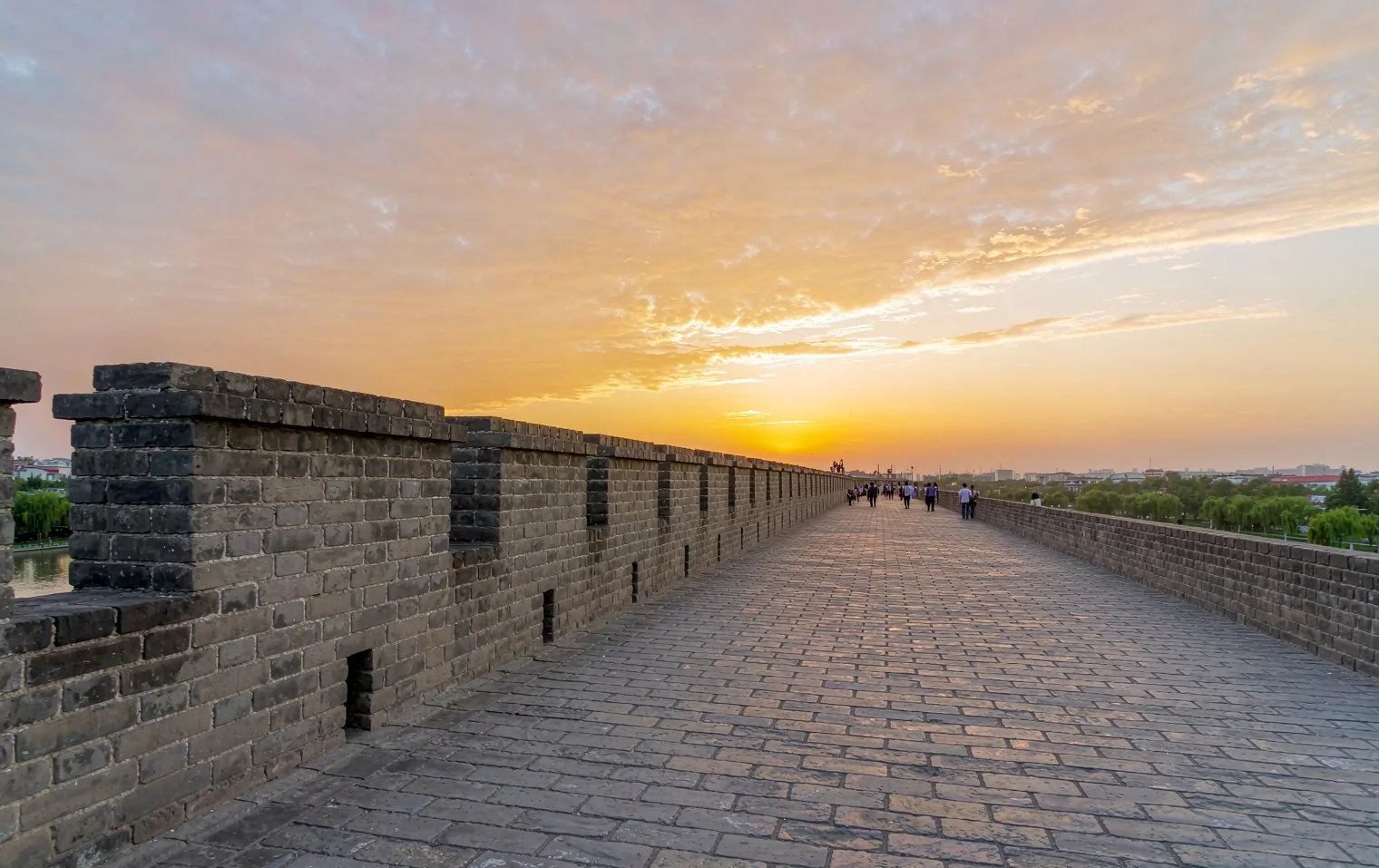
The second anchor is the city wall. You can walk a stretch or ride a full loop by bicycle, and late afternoon gives you the best light and the city spread out below. Midday offers almost no shade, so shift the timing with the season.
The third anchor is the Shaanxi History Museum, which arranges excavated material chronologically and makes far more sense of the Terracotta Warriors if you see it first or shortly after. Reservations are often required, so confirm before you fix your dates.
The fourth anchor pairs the Giant Wild Goose Pagoda with the Muslim Quarter. The pagoda area is at its best under evening lighting, and the Muslim Quarter is liveliest after dark. Both are walkable from each other, which makes them a natural way to close a day.
- Terracotta Warriors: give them a full morning. A guide changes what you notice.
- City wall: go late in the day. Walk or cycle depending on energy.
- Shaanxi History Museum: chronological, and it explains the other sites. Check booking rules.
- Giant Wild Goose Pagoda: good evening lighting and a maintained walking area.
- Bell Tower, Drum Tower and the Muslim Quarter: combine them with dinner to cut travel.
What You Must Not Skip in Luoyang
The first anchor is the Longmen Grottoes. Carvings run along both cliffs with the river between them, so you cover real distance with little shade. Going early or late in the day is easier on the legs, and comfortable shoes are effectively mandatory.
The second anchor is the White Horse Temple, widely regarded as the earliest Buddhist temple in China. The grounds are extensive and reward a slow walk. It sits in a different direction from the grottoes, so pairing them on one day means long transfers. Split them into separate half days instead.
The third anchor is the Luoyang Museum, which organises the city's very long timeline and works equally well before or after the grottoes. Because it is indoors, it also doubles as shelter from heat or rain.
The fourth anchor is the old town around Lijing Gate, best explored in the evening, where you can try Luoyang's signature water banquet. Adding Shaolin Temple towards Dengfeng requires another half day, so leave it out of a two-day plan rather than forcing it in.
- Longmen Grottoes: long riverside walk, so go early or late in the afternoon.
- White Horse Temple: set aside half a day; the grounds are large.
- Luoyang Museum: an indoor slot that holds up whatever the weather.
- Old town and Lijing Gate: dinner and a walk in one move.
- Shaolin Temple area: an extra half day if you add it.
Moving Between the Two Cities, Step by Step
On the day you transfer, do not also try to sightsee hard. Seeing one nearby site in the morning and then moving is about right, because packing and getting to the station takes longer than most people expect.
Plan to reach the station an hour before departure. These stations are large and involve security screening, so the buffer is worth it. Reserved seats matter more than usual when you are carrying luggage.
Once you arrive in Luoyang, where you stay shapes your first evening. Staying near Longmen station puts the grottoes first; staying in the centre puts the old town and the restaurants first.
1
Final morning in Xi'an
See one nearby site only, then pack. Do not schedule two stops on a transfer day.
2
Head to Xi'an North
Leave so you arrive an hour before departure, allowing for security screening.
3
Board the high-speed train
One to two hours to the Luoyang area. Keep your reserved seat details handy.
4
Arrive and check in
Longmen station faces the grottoes; Luoyang station faces the centre. Confirm which one you booked.
5
First evening
Start with the water banquet in the old town and settle the next day's route.
How Many Days, Divided How
Five and six days are the two common builds. Five days means roughly three in Xi'an and two in Luoyang; six days means three and three. The extra day in Luoyang is what lets the White Horse Temple and the museum breathe.
At seven days you could add the Shaolin Temple area or a site outside Xi'an. Be careful, though: every extra transfer reduces actual sightseeing time. Going deeper into one city usually beats adding another.
The table below lays out the same pairing across three trip lengths. Adjust the first and last day to your flight times.
| Day | Five days | Six days | Seven days |
|---|
| 1 | Arrive Xi'an; wall and towers | Arrive Xi'an; wall and towers | Arrive Xi'an; wall and towers |
| 2 | Terracotta Warriors | Terracotta Warriors | Terracotta Warriors |
| 3 | Morning in Xi'an, transfer to Luoyang | Shaanxi History Museum, then Luoyang | Morning in Xi'an, transfer to Luoyang |
| 4 | Longmen Grottoes | Longmen Grottoes | Museum and old town |
| 5 | Luoyang morning, then departure | Museum and old town | Longmen Grottoes |
| 6 | - | Luoyang morning, then departure | White Horse Temple and Shaolin area |
| 7 | - | - | Luoyang morning, then departure |
Choosing Your Season
Spring and autumn are the walking seasons in both cities. Spring overlaps with Luoyang's peony bloom, which fills the city but also adds a great deal to see. Autumn brings clear skies and stable temperatures, which suits the grottoes and the city wall best.
Summer is hot and humid, and many sites in both cities offer little shade. Splitting sightseeing into morning and evening with an indoor block at midday is the realistic approach.
Winter is cold and dry but noticeably quieter, so the grottoes and the warriors can be seen with far less crowding. Daylight is short, though, so start earlier than you would in autumn.
Around China's major public holidays both cities become very crowded for transport and entry. If you cannot avoid those dates, build in more slack and finish your reservations early.
What to Eat in Each City
Xi'an leans on wheat and lamb. Yangrou paomo, where you tear the bread into the broth yourself, is unfamiliar at first but is a genuine local breakfast. Roujiamo and biangbiang noodles are easier entry points.
Luoyang is a soup city. The water banquet arrives as a sequence of dishes and suits groups well, while breakfast often means beef or lamb broth with bread torn in. Neither the Muslim Quarter nor the old town makes vegetarian eating effortless, so decide a few dishes in advance.
Spice levels can be adjusted on request. Local phrasing does not always land, so if someone in your group struggles with heat, mention it during planning rather than at the table.
- Yangrou paomo: bread torn into broth; Xi'an's signature breakfast.
- Roujiamo: a portable snack for a travel day.
- Biangbiang noodles: wide noodles with aromatic oil; heat can be dialled down.
- Water banquet: Luoyang's signature multi-dish meal, good for groups.
- Soup breakfasts: common and gentle on an early start.
Where to Stay
In Xi'an, inside the city wall or around the Bell Tower is the safe choice. Food, night markets and the metro are all walkable, which keeps evening travel short. The pagoda area is quieter and pleasant for strolling, at the cost of one extra hop into the centre.
In Luoyang, the old town near Lijing Gate is convenient in the evening, while the area around Longmen station puts the grottoes first. The two are not far apart, so either works, but decide based on your arrival and departure times.
Because both cities involve a transfer day, weigh station access when you choose a hotel. On a day you are carrying luggage, a few hundred metres makes a noticeable difference.
- Xi'an inside the wall: food, night market and metro within walking distance.
- Xi'an pagoda area: quieter, good for walks, one hop from the centre.
- Luoyang old town: dinner and strolling made easy.
- Luoyang near Longmen station: faster to the grottoes and to onward travel.
When a Guide and a Vehicle Actually Matter
At the Terracotta Warriors and the Longmen Grottoes, interpretation changes the experience more than at almost any other site in China. At the warriors, what you look at first reshapes the whole visit. At Longmen, deciding which stretch deserves more time is genuinely difficult without help.
In both cities the sites sit away from the centre, so having a vehicle changes how much a single day can hold. For out-of-town runs such as the warriors or the Shaolin Temple area, settle transport in advance.
Tickets sell out in peak season. Once your dates are fixed, secure entry first and then build hotels and routing around it.
Language matters too. Site commentary, restaurant ordering and station navigation all happen in Chinese, so simply having the route written out in advance lowers the difficulty considerably for a first visit.
What an Agency Changes
When two capitals share one trip, where you place the single transfer day decides how the whole journey feels.
In regions where the sites are spread out, as they are around Xi'an and Luoyang, the placement of a single transfer day decides the density of the whole trip. Which city you move to and what you leave for the transfer day is hard to judge from a map alone.
Asking an operator that runs its own vehicles and guides locally, such as JoyoTour, gets you a draft that separates travel days from sightseeing days. JoyoTour was founded in 1999 and has done the same work for 27 years, with 150 itinerary designers worldwide covering different regions.
A first draft arrives within three business days and revisions are not capped. During the trip a 24-hour response channel stays open, so ticket or transport problems can be handled on the ground rather than from abroad.
Trips run as small groups of two to eight with a private vehicle and a dedicated guide, which cuts waiting and transfer time even when you are seeing the same city. No shopping stops and no optional extras, with transparent itemised quoting, are standing principles, so nothing appears on the day that was not on the itinerary.